Image created using advanced AI technology, professionally refined by Inspector Blog editorial team.
Where legitimate OnlyFans agencies actually take applications, how the first call should go, and the contract lines that should make you close the laptop. A contact guide for creators who want help without handing over the keys.
4
Contact Routes
5
Green Flags
6
First-Call Questions
1
Login That Stays Yours
Section 01
What does an OnlyFans agency actually do?
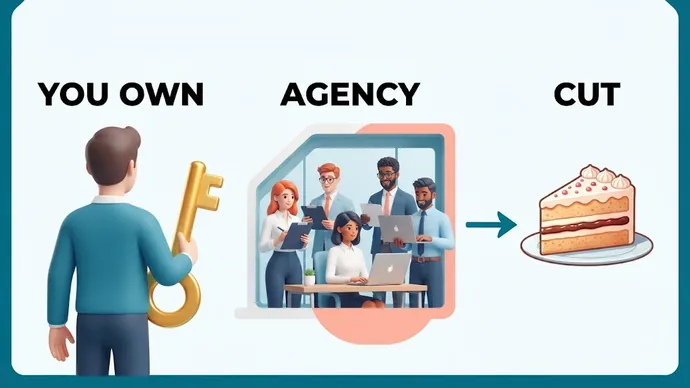
An OnlyFans agency is a management company that runs the business side of a creator's page — marketing, fan chatting, content planning and promotion — in exchange for a cut of earnings. Agency pricing guides usually quote 20% to 50% at the time of writing (November 2026), and OnlyFans keeps its own 20% fee.
The good ones work like talent management anywhere else: they bring systems, traffic and a team, and they earn their percentage by growing yours. The page stays your business; they're staff, not owners. OnlyFans' terms say the same from their side: if a third party helps run your account, the platform's relationship is still with you, and you stay legally responsible for what's posted.
The bad ones work like a lock swap. They take over the login, control the money and make leaving expensive. Everything in this guide exists to help you reach the first kind and recognize the second before you sign anything.
One Line to Remember
An agency works for you. The moment the structure means you work for the agency — their login, their payout account, their exit penalty — the deal is upside down.
The page stays yours; the agency works on it for a cut
Section 02
How do you get in contact with an OnlyFans agency?
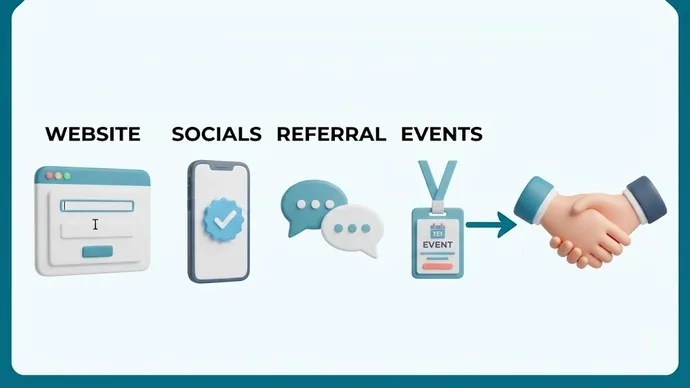
Real OnlyFans agencies are contacted through four routes: their official website's application form, their verified social accounts, referrals from creators they already manage, and industry events. You apply to them, and a good agency will want to vet you too.
1. The website application form
Every serious agency has a real site with a creator application page: your links, your current numbers, your goals. A professional site with a named team and a registered company in the footer is the baseline — no site, no deal.
2. Verified social accounts
Agencies recruit openly on X and Instagram from accounts with history and a face. Write to the account their own website links to — not to whoever slid into your DMs claiming to be them.
3. Creator referrals
The strongest route. Ask creators at your size who manages them and whether they'd sign again. An intro from a current client skips the queue and comes with a built-in reference.
4. Industry events and communities
Adult industry expos and established creator communities are where agencies show up with real people attached. A company willing to be met in person is a company that expects to still exist next year.
Direction Matters
Notice the pattern: in all four routes, you start the conversation. Cold DMs promising guaranteed income flip that direction, and that flip is a warning sign worth taking seriously.
Four routes where you start the conversation
Section 03
How do you tell a real agency from a scam?
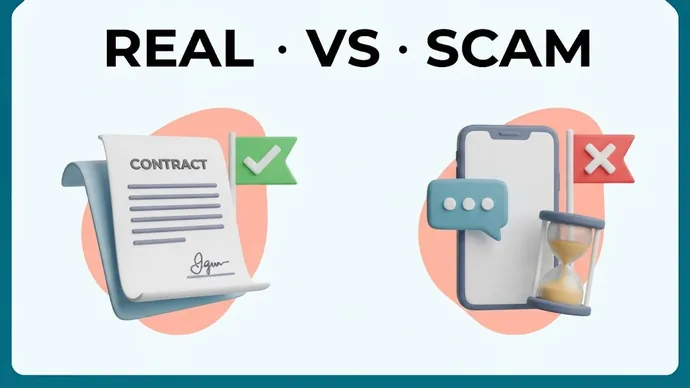
A real agency has a registered company, named humans, checkable clients and a contract you can take to a lawyer — a scam has urgency, guarantees and a fee. The two profiles barely overlap, which makes the check fast.
Green Flag
Red Flag
Registered company with a legal name and address
Anonymous team, no company, payment to a personal account
They earn only a percentage of what you earn
Any upfront fee — "onboarding", "marketing budget", "verification"
References from current creators you can talk to
Screenshots of earnings as the only "proof"
Contract sent in writing, with time to review it
"Sign today or the spot is gone" pressure
Realistic talk about growth and workload
Guaranteed income figures — nobody can guarantee fan behavior
A contract you can read, or a message that rushes you
Section 04
What should you ask on the first call?
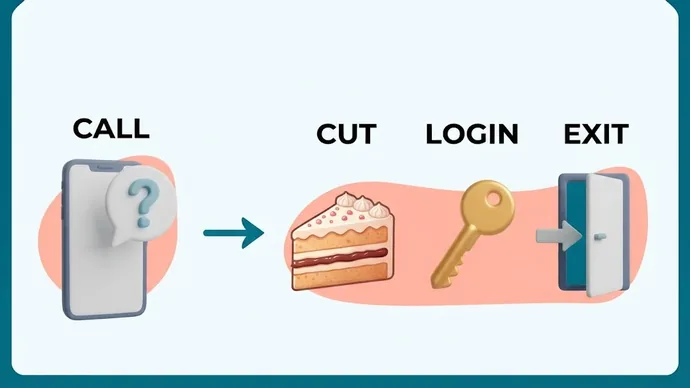
Six questions tell you everything: the cut, the login, the chatting, the payouts, the reporting and the exit. A real agency answers all six without flinching — hesitation on any of them is your answer.
The Question
The Answer You Want
What's your percentage, and on what?
A clear number, whether it applies to gross or net earnings, and no hidden costs stacked on top.
Who holds the account login?
You do. Team access can be arranged — ownership is never transferred.
Who chats with my fans, and how?
A named team with rules you approve, and nothing sent in your voice you'd object to.
Where do payouts land?
Your bank account, always. The agency invoices its share — never the reverse.
What reporting do I get?
Regular numbers you can verify inside your own dashboard.
How do I leave?
A notice period measured in weeks, not years, and no penalty for walking.
Three of the six first-call questions: the agency's cut, who keeps the login and how you leave
Section 05
What should never be in the contract?
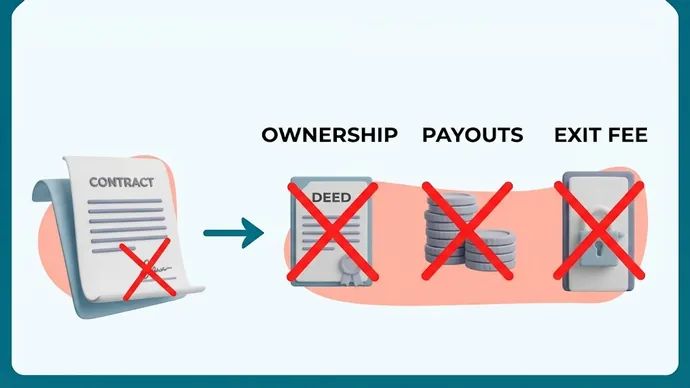
Four things should never appear in an OnlyFans agency contract: account ownership transfer, payouts routed through the agency, rights to your content beyond the campaign, and exit penalties. Any one of them is a deal-breaker on its own.
Ownership transfer means the page, the fans and the income stream stop being yours the day you sign. No management service requires owning you to promote you.
Agency-routed payouts reverse the power balance: they pay you, instead of you paying them. If the money touches their account first, your percentage becomes a promise.
Broad content rights let an agency keep using — or selling — your material after you leave. Rights should be limited to promotion, for the duration of the deal, full stop.
Exit penalties and multi-year lock-ins exist to make a bad experience too expensive to leave. A confident agency retains clients with results. And have the whole document read by a lawyer before signing — one hour of legal review is the cheapest insurance in this industry.
Three of the four deal-breakers: giving up ownership, payouts through the agency and exit fees
Section 06
Do you actually need an agency?
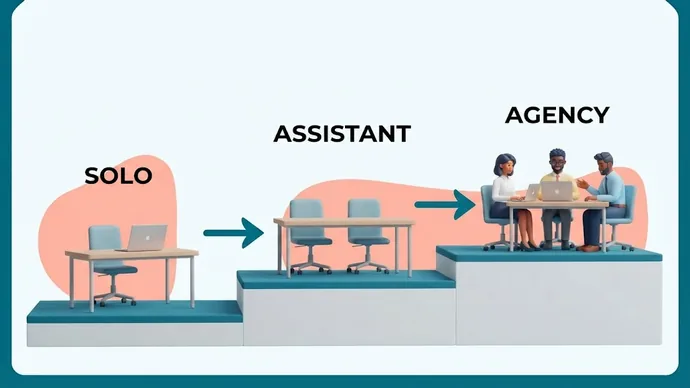
Most creators don't need an agency until the workload, not the ambition, demands one — when chatting, marketing and content planning genuinely outgrow one person's day. Before that point, a percentage of your earnings buys you time you may not need to sell.
The lighter alternatives come first: a virtual assistant for the chat inbox, a scheduler for posting, creator communities for the marketing playbook. Each costs a fixed fee instead of a percentage forever. Browsing the top amateur porn sites is free market research too: it shows how homemade content is presented to the fans you want to reach.
When the numbers do justify management, come back to the six questions above and contact three agencies, not one. Comparing offers is the fastest way to spot which percentage actually buys a team — and which just buys someone a commission.
Inspector's Note
The right time to sign with an agency is when you're too busy to read this article. The right time to learn how agencies work is now — while you still have the time to say no slowly.
Help grows with the workload
Section 07
Frequently Asked Questions
An "agency" messaged me first on Instagram — is it real?
Treat every unsolicited DM as marketing at best and a scam at worst. Real agencies do scout, but verification is on you: find their website independently, check the company, and reply through the official application route instead of the DM.
How much do OnlyFans agencies charge?
Agency pricing guides usually quote 20% to 50% of earnings, scaling with how much work they take off your plate. Ask whether that's on gross or net. Anything above half needs an exceptional justification, and anything charged upfront isn't an agency fee — it's the product being sold.
Can working with an agency get my account in trouble?
Yes, if it's done sloppily. OnlyFans asks creators for a valid ID and identity verification, run through outside providers (what happens to your document in those checks), and you stay responsible for the account. A professional agency works within the platform's terms and keeps you — the verified account holder — in control; an agency that treats the rules as decoration is risking your account, not theirs.
How do I leave an agency?
Follow the notice terms in your contract, change your passwords everywhere on day one, and confirm payouts land in your own account. If the contract makes leaving genuinely punishing, that's a matter for a lawyer — and a warning worth sharing with other creators.
Are guaranteed earnings offers ever real?
No. Fan spending can't be guaranteed by anyone, so a guaranteed figure is either bait or a loan dressed as a promise. Real agencies talk in strategies and past results, never in promised paychecks.
Section 08
Key Takeaways
What to Remember
You contact them, not the reverse: website application forms, verified socials, creator referrals and industry events are the four real routes.
The scam check is fast: registered company, named people, checkable references, written contract — upfront fees and guaranteed income end the conversation.
Six first-call questions — cut, login, chatting, payouts, reporting, exit — separate management from takeover in under an hour.
Never sign away account ownership, payout routing, open-ended content rights or your ability to leave; a lawyer's hour is cheap insurance.
An agency is a scale tool, not a starting point — compare three offers when the workload truly demands it, and keep your login either way.
The same skepticism that vets an agency is what built our list of porn sites — every site on it clears our own six-step safety check, so whichever side of the camera you're on, part of the homework is already done.
Will MollinsLead Analyst at Free Safe Porn & Web Developer
Lead analyst at FreeSafePorn.com and web developer from the USA. Every site on the list is opened, checked and kept only if it is safe to visit and works well — safety first, hype never.
Curated by experts and updated regularly — our directory covers free porn tubes, premium porn sites, live cams, AI porn and dozens of other categories.